



.png)
Lionel Messi Retires From Argentina: The End of an Era
It is the announcement every Argentine fan dreaded and, deep down, knew was coming. On Monday, 31 August 2026, Lionel Messi confirmed what had felt inevitable since that painful July night in New Jersey: he is retiring from international football. At 39, after 21 years and 207 caps in the famous sky-blue and white shirt, the greatest player of his generation is walking away — for good this time. In a handwritten note posted to Instagram, Messi explained that the decision "hurt deep down" but that "the time has come."
The Announcement That Ended an Era
Messi confirmed his international retirement in a low-key, deeply personal way — not a packed press conference, but a photo of a handwritten notebook entry in Spanish. "After the time that has passed since the final, and after giving it a lot of thought, I want to let everyone know that I am retiring from the Argentina national team," the note read. "It was a decision that hurt — and still hurts deep down — but I understand that the time has come." In a footnote at the end of the letter sat two revealing lines: "I wrote these words on July 21st, two days after the final. Today, after what happened with my dad, I am even more convinced than before." That reference to "my dad" explained so much of the emotion that surrounded the summer. Jorge Messi — Lionel's father and longtime manager — died on 8 August at a hospital in Rosario, aged 68, after a long illness. Messi had been visibly emotional throughout the World Cup and revealed during the knockout rounds that his father was undergoing medical treatment.
A Farewell Written in Pain
Messi's message read like a love letter to a country he had spent two decades serving. "I swear to you that I always gave it my all — not just in these last few years when we won everything, but before that too; I always fought and left everything on the field for this jersey, to bring you joy and make you feel proud to be Argentine through football," he wrote. "Time is running short, chapters come to a close, and this is one that hurts me deeply. I love, have loved, and will always love being part of the national team. I've given everything I had; I have nothing left to give, and besides, there are some great young players coming up who deserve to be here." That final line — "there are great young players coming up who deserve to be here" — showed the leader Messi has become. Rather than cling to the shirt, he chose to hand it over, ending his note with an emotional sign-off: "Thank you, God, for making me Argentine. Let's go, Argentina!"
21 Years of Argentina: From Red Card to Immortality
Messi's international journey began in the most surreal way imaginable. On 17 August 2005, an 18-year-old Messi came on as a 63rd-minute substitute in a friendly against Hungary. Less than a minute later, he was shown a straight red card after swinging his arm and catching full-back Vilmos Vanczak with an elbow. From that rocky debut, he became everything for Argentina: the country's all-time leading scorer and most-capped player. By the time he retired, Messi had scored 125 goals in 207 appearances — records that may stand for generations. He also leaves as the second-highest goalscorer in World Cup history with 21 goals, behind only Kylian Mbappé (22), and second on the all-time international scoring list behind Cristiano Ronaldo (146).
The 2026 World Cup: One Last Push, One Last Heartbreak
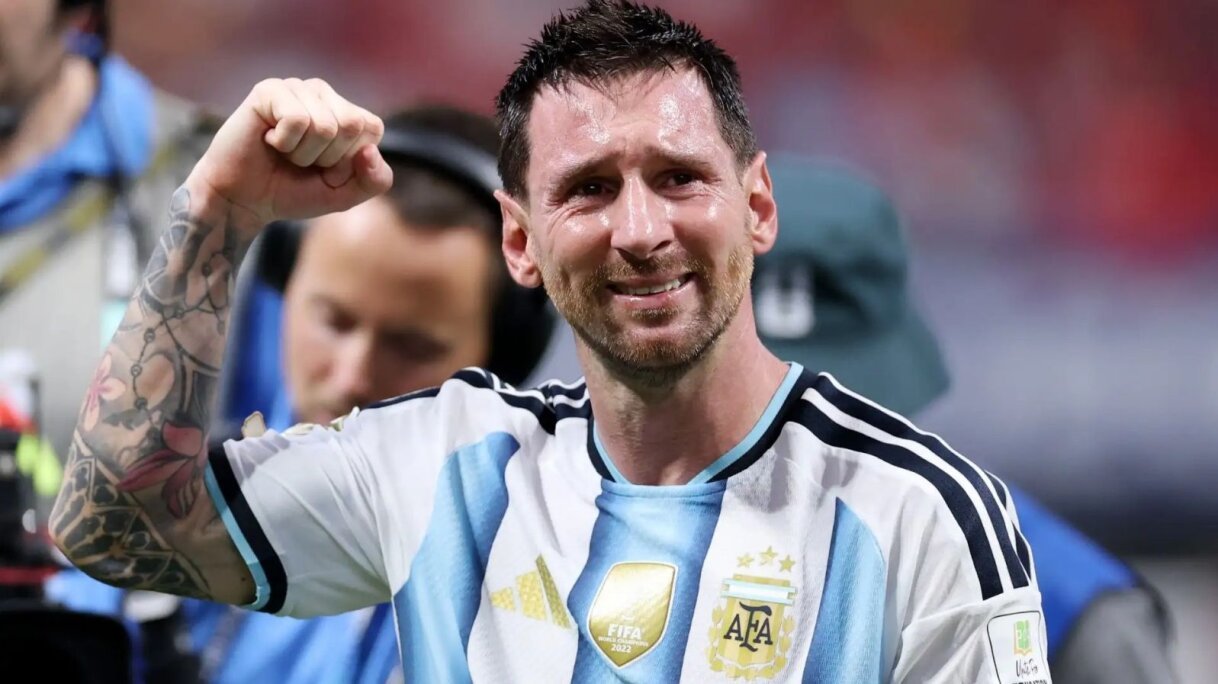
Messi arrived at his sixth World Cup knowing it would almost certainly be his last. Playing on North American soil — with his father hospitalized back home — he carried Argentina to the final yet again, scoring eight goals and providing four assists across the tournament, including the equalizer against Egypt that proved to be his final goal for his country. But the fairy tale wasn't to be. On 19 July, at MetLife Stadium, Argentina fell 1-0 to a dominating Spain side in the World Cup final. It was Messi's second World Cup final defeat — after 2014 — against one triumph in 2022. "The pain is immense," he said afterward, admitting the wound "will take time to heal." Analysts noted the gap between the sides was far wider than the scoreline suggested, and the image of a tearful Messi scanning the stadium spoke volumes: he knew.
The 2016 Retirement That Never Stuck
This is not the first time Messi has said goodbye. In June 2016, after Argentina lost a fourth major final in nine years — this time on penalties to Chile in the Copa América final, with Messi missing his spot-kick in the shootout — a devastated Messi announced he was quitting the national team. He was 29 then, and the criticism had reached its peak: the club genius who couldn't deliver for his country, endlessly compared — unfavorably — with Diego Maradona. Argentina begged him to stay, and weeks later he reversed the decision. It proved to be the best decision Argentina ever talked him into.
The Golden Years: World Cup 2022 and Two Copa Américas
Staying changed everything. In 2021, Messi finally ended Argentina's 28-year trophy drought, leading the team to Copa América glory in Brazil — beating the hosts at the Maracanã. Then came the crowning moment: the 2022 World Cup in Qatar, where Messi scored in every knockout round, including twice in the final against France, to deliver Argentina's first World Cup since 1986. He wasn't done. In 2024, Argentina defended their Copa América title, adding a second continental crown to his collection. In three years he won everything there was to win with his country — a redemption arc that turned him from a brilliant loner into the most beloved Argentine since Maradona.
What's Next for Messi?
His retirement is from international football only — the club career continues. Messi remains under contract with Inter Miami in Major League Soccer until the end of the 2028 season, when he will be 41, and he has already returned to scoring form since the World Cup, netting four goals in the 7-1 demolition of Montreal. There has been endless speculation about a romantic return to Newell's Old Boys in Rosario, but most observers expect Miami to be the final chapter. As South American football writer Tim Vickery put it: "Inter Miami fans are the lucky ones. They will get the last drops of this little man's genius."
The World Reacts
The tributes arrived within minutes of the announcement. Messi's wife, Antonela Roccuzzo, wrote an emotional post: "I saw you keep going when things didn't work out and always try again... You deserved this story and so much more. We love you infinitely." Argentina's president Javier Milei thanked "the impossible man," and FIFA president Gianni Infantino praised "an extraordinary international career that has inspired millions of people and redefined our sport." The Argentine Football Association wrote simply: "Thank you for making us dream. Thank you for turning so many dreams into reality. The legend is yours, forever." Former teammates Ángel Di María, Rodrigo De Paul, Enzo Fernández and Lautaro Martínez all paid heartfelt tribute, with De Paul posting: "You can't imagine how many times you made people smile. You are eternal."
The Legacy
Gary Lineker — a man who knows about carrying a nation's hopes — summed it up best: "You didn't just play for Argentina, you carried their hopes, dreams and expectations for two decades. Football will move on, as it always does, but the memories you've given Argentina and the world will never leave. Thank you, Leo." By the numbers, Messi leaves as Argentina's record appearance-maker (207), record scorer (125), a World Cup winner, a two-time Copa América champion, an Olympic gold medalist, and a six-time World Cup participant. But the numbers were never really the point. For 21 years Lionel Messi gave Argentina a reason to believe — through the heartbreaks, the missed penalties, the tears, and finally through the greatest redemption story football has ever seen. Now, in his own words, he will be "just one of you, cheering and supporting from the outside (through the good times and the bad — especially the bad)." Somewhere, a kid in Rosario is about to pull on the No. 10 shirt and dream a little bigger. That is the real legacy. Messi has left the international stage — but for Argentina, he will never really be gone.

Leave a Reply